


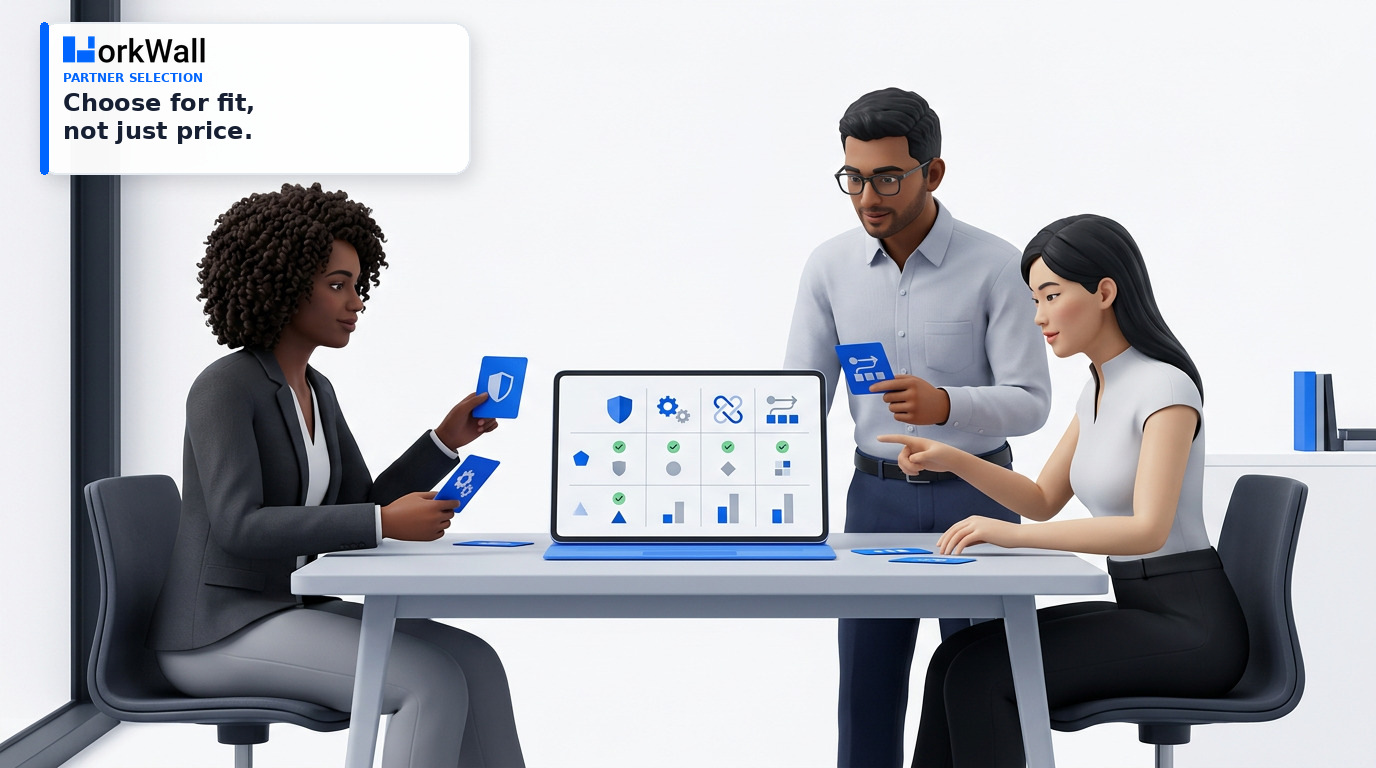
Before scoring, define the conditions a provider must meet to be considered. Depending on the project, these may include a required technical capability, availability during a specific window, security or confidentiality controls, a delivery location, or acceptance of a particular contract process.


Treat these as gates, not bonus points. A proposal that misses a critical requirement should not rise to the top because it is inexpensive or especially polished. Ask your security, legal, procurement, and technical stakeholders to review requirements that fall within their remit.
Rate each criterion on a simple scale—for example, 1 = weak evidence, 3 = adequate, 5 = strong and specific evidence. Add a short note explaining the score. If some criteria matter more for this project, agree on their relative importance before reviewing proposals; do not change the rules after seeing a preferred bid.
Does the proposal address the reason for the project, or only repeat the feature list? Look for a clear explanation of the problem, the intended users, and how the provider would confirm that the work is delivering value.
Ask for examples that resemble your project in technology, operating context, or complexity. A logo list is not enough. Useful evidence explains what the team did, what constraints it faced, and what the prospective partner learned. Confirm references where appropriate and with permission.
Evaluate the people who would actually do the work—not only the senior person who presents the proposal. Check relevant skills, roles, availability, continuity, and how substitutions would be handled. A strong firm-level profile does not automatically mean the named team is the right fit.
Look for a sequence that makes sense: discovery, design or planning, implementation, testing, review, and handover where relevant. Are dependencies visible? Are milestones tied to outputs and acceptance? Does the plan explain how issues will be surfaced and resolved?
The provider should be able to explain how it will work within the controls that apply to your project. Consider data access, account management, confidentiality, ownership of deliverables, subcontracting, and any regulatory or contractual requirements. Have the right internal specialists validate the details; a proposal is not a substitute for legal or security review.
Assess how the proposed approach works with your current architecture, integrations, data, and operational constraints. Ask what the provider would preserve, replace, or connect—and what assumptions need a technical discovery session. Favor maintainable solutions over unexplained complexity.
Who is accountable day to day? How will decisions, risks, changes, and approvals be recorded? What documentation, training, or handover will your team need at the end? Clear ownership is especially important when several vendors or internal groups share delivery.
Compare the same scope, not just the headline price. Review assumptions, exclusions, rate or milestone structure, change handling, support, expenses, and payment triggers. Ask each provider to identify the conditions that could change the estimate. A transparent proposal may be easier to manage even if its initial figure is not the lowest.
A red flag is a prompt to ask a better question, not always a reason to reject a provider. Give the team a chance to clarify—and keep the answer in the evaluation record.
WorkWall is a marketplace for businesses, technology firms, and technology resources. It can be one channel for discovering potential partners and reviewing proposals. Use the same brief and scorecard for each option, and complete your normal commercial, technical, security, and legal checks before work begins.

Are you a tech founder, project lead, or tech recruiter? Do you dream of taking your business to the global stage?

In the fast-paced world of technology startups, young founders face numerous challenges when it comes to recruiting.....

In the competitive landscape of tech firms, attracting and securing top talent is crucial for the success of any IT firm....

In today’s competitive IT job market, traditional methods of recruiting talent may not always yield the desired results....

Nvidia, a leading technology company renowned for its graphics processing units (GPUs) has experienced remarkable growth in its stock price over the past six years

In today’s competitive business landscape, building and maintaining a robust IT talent pipeline is crucial for organizations striving to stay ahead.

In today’s fast-paced digital landscape, staying up to date with the latest technology trends and harnessing their full potential is key to thriving in the modern world

You must have heard “the fox knows many things, but the hedgehog knows one big thing.So how do they add value to the business? I’ll explain it with a short story:

Most people settle for a comfortable life instead of striving for greatness. The same goes for companies....
Stay ahead of the tech curve! Subscribe to our weekly newsletter for a curated dose of the latest industry insights, project highlights, and exclusive updates.