


.png)
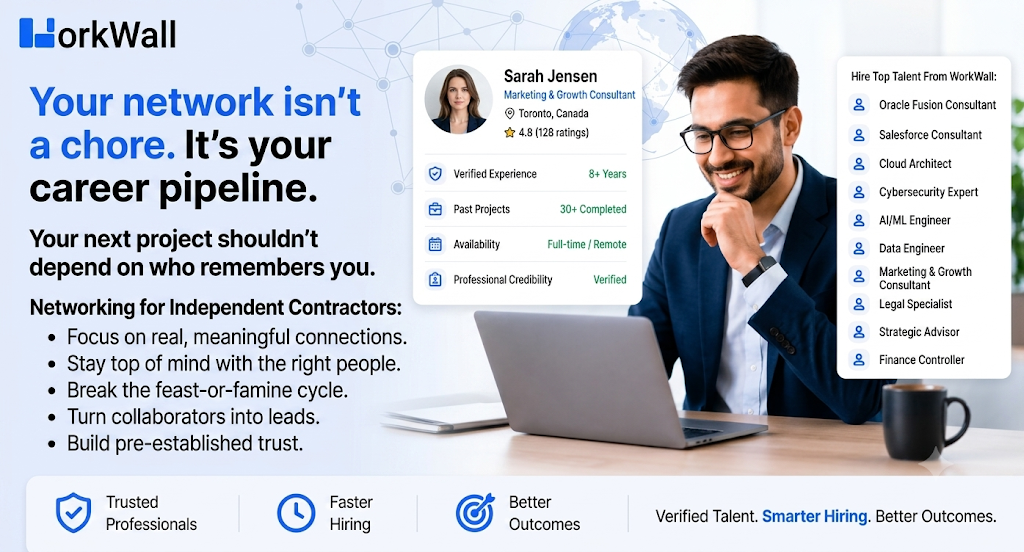
No one talks about this enough, as an independent contractor, you don't have HR, you don't have a manager fighting for your next contract, and you definitely don't have a guaranteed paycheck if a client ghosts you. What you do have is whoever knows you, trusts your work, and thinks of you when something comes up. That's the entire function of a network – it's a group of people who might say your name in a room you're not in. A past client mentioning you to a friend who needs the exact thing you do. A fellow freelancer forwarding you an overflow project because they're slammed. A vendor recommending you to a business client because they've seen your work firsthand. None of that happens if the only people who know you're great at your job are, well, you. Referrals and warm intros consistently convert better and close faster than cold outreach, because trust is already halfway built before you even say hello. Networking is how you stack up that trust in advance, so opportunities come to you instead of you having to hustle for every single one from zero. It's Not About Collecting Contacts, It's About Being Remembered A LinkedIn inbox full of people you added once and never spoke to again isn't a network — it's a graveyard. Real networking for independent contractors isn't a numbers game. It's about being the person a handful of people actually think of when the right moment comes up. That means the goal isn't "meet as many people as possible". It's "build a handful of real, ongoing relationships with people who are adjacent to your work", other freelancers in your field, people one step different (designers if you're a copywriter, developers if you're a project manager), past clients, and vendors or platforms that regularly connect contractors with projects. You don't need to be a social butterfly for this. You need to show up consistently, be genuinely useful when you can, and stay easy to remember which usually means being specific about what you do, not vague.

Ask any independent contractor about their biggest fear and you'll hear some version of the same thing: the dry spell. The gap between projects where work just... stops, and panic starts creeping in.
A strong network is basically insurance against that gap. When you're plugged into other contractors, past clients, and vendors, you're not starting from zero every time you need new work – you've got multiple channels that might surface something. Other freelancers pass along projects that aren't a fit for them. Past clients circle back when a new budget opens up. Vendors and staffing platforms think of you when a relevant project lands.
This is also exactly why platforms built around connecting contractors to real opportunities like WorkWall and LinkedIn, matter so much. They function like a built-in network that's already stocked with businesses and vendors actively looking for talent, so you're not relying purely on who happens to remember you exists. Combine an active personal network with a strong presence on a platform designed to surface you to the right people, and the feast-or-famine cycle gets a lot less scary.
There's this instinct to see other freelancers doing similar work as competition to avoid. In reality, some of the best opportunities for independent contractors come from other independent contractors because most people can't do everything themselves, and smart freelancers know exactly who to call when a project needs a skill they don't have.
A web developer who gets asked for copywriting help refers to it. A branding consultant whose client also needs a videographer sends the intro. A project manager overwhelmed with client work passes the overflow to someone they trust. None of this happens if you've never bothered to build a real relationship with people doing adjacent work.
Treat other contractors like potential collaborators instead of rivals, and your network basically starts working for you in the background, no extra effort required beyond just being a decent, reliable person to know.
Here's something worth sitting with: clients hate risk. Every time a business or vendor hires someone new, they're taking a gamble – will this person deliver, will they communicate well, will the work actually be good. A referral short-circuits all of that anxiety in one move. When someone a client already trusts says "you should talk to this person," you've just skipped a dozen steps of proving yourself from scratch.
This is the real reason networking outperforms cold outreach almost every time. It's not that your portfolio or pitch is any less good – it's that trust transferred from someone else is worth more than trust you're trying to build from a standing start. A single warm intro from the right person can do more for your pipeline than weeks of cold emails, simply because the hardest part – belief that you're worth the risk, has already been handled before you even show up.
That's also why it's worth being intentional about who you build relationships with, not just how many. A handful of people who genuinely trust your work and are plugged into the kind of clients you want will outperform a huge, shallow network every time.
One underrated truth – every project you complete is a networking opportunity, whether you treat it that way or not. The client you just wrapped up with knows other people. The vendor who placed you on a project has other clients. The teammate you collaborated with on a contract has their own circle. Doing great work and then quietly moving on without staying connected is leaving a huge amount of potential opportunity on the table.
This doesn't mean turning every client relationship into an awkward ask for referrals. It means treating the end of a project as the start of an ongoing relationship instead of a clean break – a quick check-in a few months later, a congratulations on something you saw them post, an offer to help if something comes up. Contractors who do this consistently end up with a slow, steady stream of repeat work and referrals, simply because they never let the relationship go cold the moment the invoice was paid.
You don't need to become a LinkedIn influencer or attend every networking mixer in your city. A few low-effort, high-impact habits do most of the work:
Stay visible without oversharing. Post occasionally about real projects, real wins, real lessons – not generic motivational content. People remember specifics, not vague positivity.
Follow up like you mean it. Met someone useful? Send one genuine message afterward. Not a sales pitch – just a real connection point. That single follow-up is often the difference between "forgettable interaction" and "actual relationship".
Give before you ask. Share a lead, offer a quick answer to someone's question, make an introduction. Networking that only flows one direction – always asking, never giving, runs dry fast.
Keep your profiles current. A network can't work for you if people who go looking for you find an outdated bio or a portfolio that hasn't been touched in a year. Consistency across your profiles, your platform presence, and your actual availability keeps you top of mind.
Show up where the right people already are. Whether that's industry-specific communities, contractor-focused platforms, or spaces where businesses and vendors are actively looking to hire, put yourself where opportunity is already flowing instead of trying to generate it entirely from scratch.
Networking doesn't have to mean stiff handshakes and forced small talk. For independent contractors, it just means being a real, visible, trusted presence to the people and platforms that can put opportunities in front of you. Every relationship you build, every genuine follow-up, every time you show up consistently, is one more thread in a safety net that keeps your work steady.
You built a career on being good at what you do. Networking – real, low-key, relationship-first networking is how you make sure the right people actually know it.


Stay ahead of the tech curve! Subscribe to our weekly newsletter for a curated dose of the latest industry insights, project highlights, and exclusive updates.